
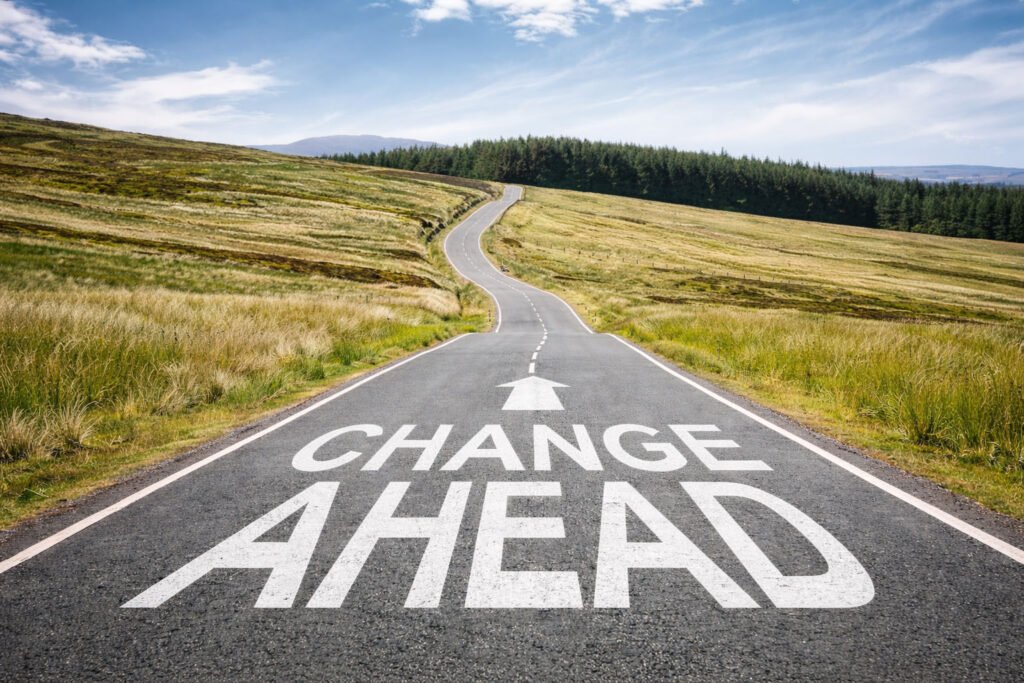
New Starts Don’t Have to Be Revolutionary
After a period of reflection, there’s often one question that follows. “What now?”
I don’t mean in some kind of dramatic sense, or in a ‘turn your life upside down’ kind of way. It’s more like gently wondering about whether things could feel a little lighter, less stressful, more meaningful or a little more aligned with where you want to be than they do right now.
Once we reach midlife, new starts rarely look the way they once did. They’re no longer about bold declarations or clean slates. Instead, they tend to be a little more subtle, shaped by experience, responsibility, and a better understanding of our own limits. And that’s not a bad thing.
Why Change Feels Different in Midlife
When we were younger, change often came easily. The energy we needed was easier to find, and our recovery was far quicker. And if we made a mistake, it felt far less costly, because starting again didn’t carry the same emotional weight that it does when we’re in our 40s, 50s or beyond.
In our midlife it’s different. You’re likely balancing work, family, finances, health, and a long list of expectations and a ‘To Do’ list that seems to be ever increasing in length. Even positive change can feel like one more thing to manage. And that’s often why good intentions stall and fall by the wayside, long before they really begin.
But it’s not down to a lack of discipline or motivation. It’s because we often lack the capacity to ‘do it all’. And understanding that difference is hugely important; because it shifts the conversation away from self-criticism and towards something far more useful. Realism.

The Pressure We Put on New Starts
There’s often a lot of noise around change, starting over, and reinventing yourself. There seems to be an almost never ending stream of coaches who are constantly telling you that you need to commit fully, and above all else, don’t slip! But the thing is, that’s the last thing you actually need to hear. Which is the whole point of this post.
For most of us, that pressure ends up becoming the very thing that stops us from making progress at all. When the change that we desire feels like an all-or-nothing decision, it’s easier to do nothing at all. It’s not about climbing mountains; it’s simply about the next step. Always the next step.
Let’s break it down, because you’ll probably recognise the pattern:
- You decide something needs to change.
- You set expectations that are too high for your current energy levels or capacity.
- You struggle to keep up.
- You quietly abandon the plan.
- You tell yourself you’ve failed.
But let’s get one thing out of the way. That cycle doesn’t mean you’re bad at change. It simply means the approach didn’t fit the stage of life you’re in. You need to adopt a different, more sustainable approach.
What Sustainable Change Actually Looks Like in Midlife
Real, lasting change is rarely some kind of dramatic fanfare. It’s more of a gradual process, and often unremarkable from the outside. And that’s exactly why it works. Once we alter our mindset from ‘revolutionary’ to ‘evolutionary’, things make much more sense. Change becomes both achievable and sustainable.
The key is to begin with one or two small, simple adjustments, not a whole heap of big promises. Not climbing the mountain, just taking the next step.
Instead of asking yourself, “How do I fix everything?”, a more helpful question is: “What would help this day feel a little more manageable?”
That one small shift alone removes a huge amount of pressure. Because, when change is framed as support rather than self-improvement, it becomes far easier to start, and easier to continue.
For example, when I first decided I wanted to lose weight and get fit again, I set myself what I eventually realised was a huge target. I wanted to lose 30 lbs and run a 5k, with no real plan (other than the couch to 5k app). All in 4 months, at the start of a new year, and at one of the busiest times in my work life at that time! I’d set myself up for failure straight away.
But once I realised this and took the opportunity to reflect, I came up with a simple and sustainable plan. Now? Well, in around 4 months, I lost the 30 lbs, but I did it in a sustainable manner. I started walking to regain my fitness levels. Once that became a habit and part of my daily routine, I found that I was slowly, but steadily losing weight. The next step was that I also began tracking my calories and protein intake. These two things combined, helped me to achieve my goal in a repeatable and sustainable way that was easy to slot into my everyday routine.

Letting Go of the Guilt Around Starting Again
Many of us carry a sense of guilt about the changes we didn’t stick to before. The routines that faded, and the habits that slipped. The good intentions that never quite made it.
But let’s be honest for a moment, midlife isn’t a straight line. It’s shaped by seasons, demands, and those unexpected twists and turns that occasionally blindside us. So choosing to re-start isn’t a sign of failure. It’s a sign that you’re paying attention.
Each time we return to something supportive, like walking, resting, reflecting or setting boundaries; it happens with more awareness than the last. You’re not starting again from scratch, you’re starting with more experience. And that is an important distinction that really matters.
Again, using my fitness and weight loss journey as an example, once I’d taken the time to reflect on what went wrong, and look at the bigger picture, I was able to see that I needed to set micro challenges to build sustainable habits. Not trying to climb the mountain, just taking the next step.
Three Subtle Ways to Begin Again
Before we go any further, I just want to say, you don’t need to do all of these. This isn’t a checklist that you have to complete. Even doing one is enough, and that’s the point. This is all about sustainability. These are micro challenges. When you adapt them to your own set of circumstances, each is good enough on it’s own to set you on the right path. You can build on them, or add others when you are ready. But only when you are truly ready.
-
Start where you actually are, not where you think you should be.
If your energy is currently low, begin with something that respects that. Go for a short walk, even if it’s only for 10 minutes. It’s getting outside for that walk that counts most, not smashing some imaginary PBs!
Try going to bed earlier a couple of nights a week. This helps to establish a routine, and also helps to re-set your circadian rhythm (your natural body clock).
Consider a digital detox to help calm your mind and help you to better manage, and consequently, reduce your stress and anxiety levels.
These are changes that you can easily adopt. And if they fit in with where you are, and they are achievable and sustainable, they will quickly become a habit that is far more likely to last.
-
Change one thing, not everything.
Pick one small adjustment that supports your wellbeing. Just one.
Because when too many changes compete for attention, none of them will stick. So settle on just one small thing to change, which you can repeat without any additional competing pressure. This will quickly help to build a routine which will then create a momentum of its own.
-
Measure progress by how you feel
Once you’ve picked your micro challenge and you’re around a week in, check in with yourself. I don’t mean by tracking numbers, streaks, or outcomes. Instead, try asking yourself the following, but it’s important that you are honest with yourself.
- Does your mind and/ or body feel a little calmer?
- Is your mind less cluttered?
- Are you recovering slightly better after those busy days?
- Do you find your energy levels are rising?
Those are meaningful signs of progress, even if on the surface they’re easy to overlook. Don’t take the small milestones for granted. Recognise them and look to build on them. Gradually.
Why Small Changes Add Up Over Time
It’s easy to underestimate the impact of these small actions, because they don’t deliver instant results and the gratification that we often crave. But in midlife, consistency beats intensity almost every time.
It’s by making small, supportive choices that we reduce the strain on the nervous system. They create space. They help you to rebuild trust in yourself. And over weeks and months, they quietly change how life feels. Not all at once, and not is some dramatic way marked by fireworks and streamers, but by steadily forming new habits and routines. And that is what makes this style of change both sustainable and enjoyable.
Moving Forward Without a Deadline
There doesn’t need to be a perfect moment to begin. No milestone date; no symbolic fresh start; no huge fanfare. You can begin today. Or tomorrow. Or next week. But preferably today, otherwise procrastination and overwhelm will likely set in, and you’ll likely not be able to break the inertia.
What matters is that the change feels realistic, and repeatable, not some impressive record breaking streak. You’re not trying to become someone else. You’re learning how to take better care of the person you already are, in the life you’re already living.
So take that one small step today. Then do it again tomorrow, and the day after. Then, before you know it, you’ll be at the top of your mountain. And the view will be amazing.
Final Thoughts
If you’ve found this article helpful, Momentum is where I continue the conversation each week. It’s my free, no-strings newsletter, where I share simple, practical ideas to support physical and mental wellbeing in midlife; without pressure or unrealistic expectations.
Why not sign up below, you’ve nothing to lose. It’s a 5-minute read every Wednesday, and you never know, it might just change your life. At worst, you’ve lost 5 minutes.