
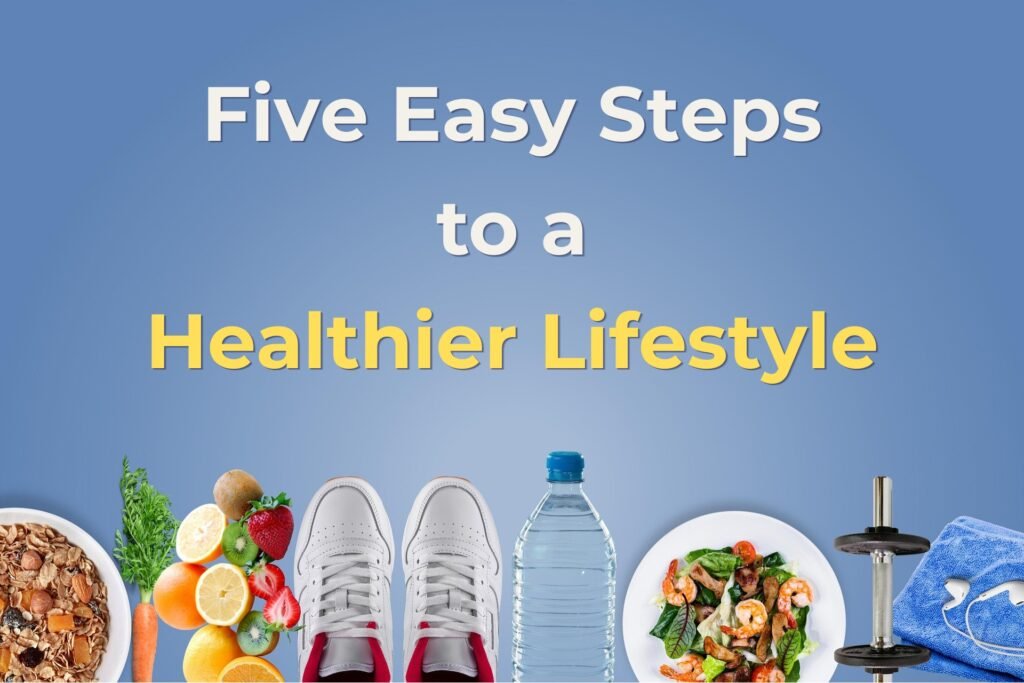
Improving your health doesn’t need a complete lifestyle overhaul
If you’re over 40 and trying to improve your health, it can sometimes feel as though every article is telling you to change everything at once. Eat perfectly. Exercise every day. Sleep more. Stress less. Drink more water. Cut out sugar. Start a whole new routine on Monday. Keep it up for 30 days and transform your body!
It’s exhausting just thinking about it! And it’s often one of the reasons so many people struggle to make lasting changes. We often assume that getting healthier means doing something dramatic, when in reality the best place to start is usually much smaller.
So instead of overhauling your lifestyle overnight, I found that it’s much easier and more effective to make a few simple changes that feel easy enough to repeat again the next day. Because if a change feels easy enough to do today, it’s far more likely to be something you can do tomorrow. And the day after that. And the day after that.
That’s how real progress happens, and that’s how we can achieve lasting change.
So, if you’re ready, and want to improve your physical and mental health in midlife, here are five small daily habits that can support better physical and mental wellbeing in midlife. Together, they can make a meaningful difference over time; without forcing you to reinvent your lifestyle overnight.
This is the exact plan I developed and used to start my health and fitness journey, which has resulted in me losing over 30 lbs (14kg) which is over 2 stone at the time of writing. And as a result, both my physical and mental health has also significantly improved into the bargain.
The 5 small changes
- Eat one extra piece of fruit
- Eat one extra portion of vegetables
- Replace one sugary drink with water or a low-calorie option
- Go to bed 30 minutes earlier
- Take 10 minutes to calm yourself when stress rises.
That’s it.
Not a complete reset, and no mythical 12-week transformation program. Just five simple changes that are realistic enough to start straight away.
University College London research into behaviour change consistently shows that small, manageable actions are far more likely to increase the likelihood that new habits become automatic over time. When a change feels simple enough to achieve today, it’ll be just as easy to achieve tomorrow, and the next day, and the day after that.
Do you see where this is going?
Why small changes work better than big health plans
Many of us believe that improving our health requires a complete lifestyle overhaul. We think we need to start exercising every day, cut out entire food groups, wake up earlier, and suddenly become a completely different person by next week.
But these big lifestyle changes often fail for one simple reason: they ask too much of us too quickly.
Small changes work differently.
They’re easier to begin, easier to repeat, and much less intimidating when our lives are already busy or stressful. And once a habit starts to feel like a part of our normal routine, it becomes far easier to maintain over time, because it counters our resistance to change. It lowers the level of effort required to begin. And most importantly, it helps build confidence through our early successes, rather than relying on motivation alone.
Once something feels achievable, our brain stops treating it as a challenge and starts accepting it as routine. And once something becomes routine, or habit, it’s much easier to repeat consistently.
That matters because that consistency is what creates results. A small habit carried out every day will usually do far more for your health than an ambitious plan you only manage for a week.
1. Eat one extra piece of fruit each day
Adding one extra piece of fruit each day may not sound like much, but it’s one of the easiest ways to improve your diet without feeling restricted.
Fruit provides fibre, vitamins, antioxidants, and hydration. It can help support digestion, energy levels, and overall wellbeing. It can also help you feel fuller between meals, which can make it easier to avoid reaching for less nutritious snacks (I’m thinking biscuits, chocolate bars or crisps, here) later in the day.
The real benefit, though, is not just the fruit itself, it’s the habit. Because once you get used to adding something healthy to your day, you begin to shift your routine in a more positive direction without feeling as though you’re on a diet.
Easy ways to do this
- Add a banana or apple to your breakfast
- Keep grapes, berries, or any other easy-to-grab fruit in the fridge, ready to go
- Have fruit in the afternoon, instead of automatically reaching for those biscuits or crisps.

2. Add one extra portion of vegetables
Vegetables are one of the simplest ways to improve the nutritional quality of your meals.
Simply by adding one extra portion each day increases your intake of fibre, vitamins, and minerals; and helps make meals more balanced and filling. According to NHS guidance, adults should aim for at least five portions of fruit and vegetables per day, and yet many of us fall short. One additional portion helps close that gap without requiring major dietary changes.
You don’t need to make this complicated.
You don’t need to suddenly start making elaborate healthy lunches or cooking from scratch every evening. Just build on what you’re already eating.
A handful of spinach or some carrot sticks with breakfast; a little extra veg with dinner. Perhaps keep some frozen vegetables handy, ready to add to a quick meal. These may seem like small changes, but they still count.
Over time, these tiny improvements add up and help create a healthier baseline for the way you eat.
Easy ways to do this
- Add tomatoes, spinach, or carrots to breakfast
- Include an extra vegetable with lunch or dinner
- Keep frozen vegetables in the freezer for convenience.
3. Replace one sugary drink each day
One of the easiest places to make progress with your health is in what you drink.
Sugary drinks can add a surprising number of calories to your day without making you feel full, which means it’s very easy to consume more than you realise.
Replacing just one fizzy drink each day with water or a low-calorie alternative can be a simple habit that supports weight management and better overall health over time. And because it’s only one swap, it doesn’t feel as though you’re depriving yourself or suddenly banning everything you enjoy.
Sometimes that’s the difference between a change you resent and a change you will actually stick to.
Easy ways to do this
- Swap one fizzy drink for still or sparkling water
- Keep a bottle of water near you during the day
- Use a low-calorie option as a stepping stone if plain water feels too difficult at first.
4. Go to bed 30 minutes earlier
Sleep is often overlooked when people think about improving their health, but it has a huge impact on how we feel and function every day.
Poor sleep can affect your mood, energy, stress levels, appetite, and decision-making. And in midlife, many of us start to notice more clearly just how much worse everything feels when we’re tired.
Going to bed just 30 minutes earlier won’t fix everything overnight, but it can help you feel more rested, more resilient, and more capable of making healthier choices the next day.
Easy ways to do this
- Set a reminder to start winding down
- Stop scrolling a bit earlier than usual
- Dim the lights and make bedtime feel more intentional.

5. Take 10 minutes to calm yourself when your stress levels rise
Stress affects far more than just your mood. It can affect your sleep; your eating habits; your patience; your concentration; and your ability to make good decisions when you’re already feeling stretched.
That’s why taking just 10 minutes to step away when your stress level starts to rise can be so powerful. This doesn’t have to mean a full-on meditation session or sitting cross-legged in silence. It can be something much simpler.
Try going for a short walk; take a few deep breaths. Or simply step outside for some fresh air. Try putting your phone down (or not automatically reaching for it). Leave the room for five minutes before responding to someone who is winding you up or ‘pushing your buttons’.
These short pauses help interrupt your stress response and give you a little space to reset before that stress spills into the rest of your day.
Easy ways to do this
- Take a short walk
- Step outside for fresh air
- Sit quietly for a few minutes and breathe more slowly
- Pause for a few minutes before replying to that email.
Why these small habits matter more than they seem
On their own, these changes might not look especially impressive.
But that’s exactly the point.
They’re simple enough to do without needing a huge burst of motivation. Small enough not to feel overwhelming. Easy enough to repeat.
And when you repeat something often enough, it begins to feel normal.
That’s when the real change happens. You stop trying to be healthier and start becoming someone who naturally makes healthier choices.
And that small mindset shift matters far more than people realise. Because lasting health improvements rarely come from one big moment of transformation. They come from small actions repeated consistently over time.
Why most people struggle with big lifestyle changes
For most of us, simply breaking inertia and starting is the hardest and most overwhelming part.
All-or-nothing thinking makes this worse. We tell ourselves we need to do everything properly from day one. Eat perfectly. Exercise daily. Never slip up. Never miss a day.
And when that becomes impossible to sustain, we feel as though we’ve failed. But you haven’t failed, you’ve most likely just started with too much, all at once.
Starting by making small changes removes that pressure. It makes success possible, immediately. And once you succeed at something small, you build the confidence to do a little more.
How small success leads to bigger progress
This is the part people often miss.
The five habits in this article are not the finish line. They are the starting point. That’s where I started, and I’ve gradually built on it and added other aspects to my daily routine. If you’d like to know more, why not drop me a line in the comments below.
Because once you realise you can stick to one small change, you become more willing to make another. Maybe one extra piece of fruit becomes two.
Maybe one earlier night leads to a better sleep routine.
Maybe one short walk when you’re stressed becomes a regular habit of moving more.
Success creates momentum. You don’t need to force yourself to change your entire life in one go. You just need to prove to yourself that change is possible.
And the easiest way to do that is to start small.

A simple plan you can start tomorrow
If improving your health feels overwhelming right now, begin here:
- Add one piece of fruit to your day
- Add one extra vegetable to one meal
- Replace one sugary drink
- Go to bed 30 minutes earlier
- Take one short pause when your stress level rises.
That’s enough.
You don’t need a perfect routine. You don’t need to get everything right. You don’t need to become a different person overnight.
You just need a few simple actions that are easy enough to repeat. Tomorrow. Then the next day. Then the day after that.
Final thoughts
You cannot completely transform your health in one day. But you can absolutely start transforming it in one day.
That’s the difference.
Lasting change doesn’t usually begin with some dramatic breakthrough. More often, it begins with one small action that feels manageable enough to repeat.
And over time, those small actions stop looking small. They become the habits that shape your days, your decisions, and eventually your results.
If improving your health in midlife has felt overwhelming until now, don’t aim for perfect. Aim for possible.
Because possible is what leads to progress.
If you’re working on your health in midlife, you may also find my article on mental health over 40 helpful. Why not also also check out Momentum for more practical wellbeing advice straight to your inbox once a week.
FAQs
Are small lifestyle changes really enough to improve health?
Yes, small changes can make a real difference when you repeat them consistently. They are often easier to stick to than extreme plans, which is why they can be so effective over time.
What is the easiest healthy habit to start with?
That depends on your current routine, but replacing one sugary drink or adding one extra piece of fruit is often a very manageable place to begin.
Can small changes help with weight loss?
They can support weight loss over time, especially when they help reduce excess calories, improve sleep, and make healthier habits easier to maintain.
How long does it take for a small habit to stick?
It varies from person to person, but the key is repetition. The easier a habit feels, the more likely you are to keep doing it.
What if I miss a day?
Missing one day doesn’t undo your progress. The aim is not for perfection here. The aim is to return to the habit again the next day.
Why do big health plans often fail?
They often fail because they ask too much, too soon. Small habits usually create less resistance, which makes them easier to maintain in real life.
Great content! Keep up the good work!